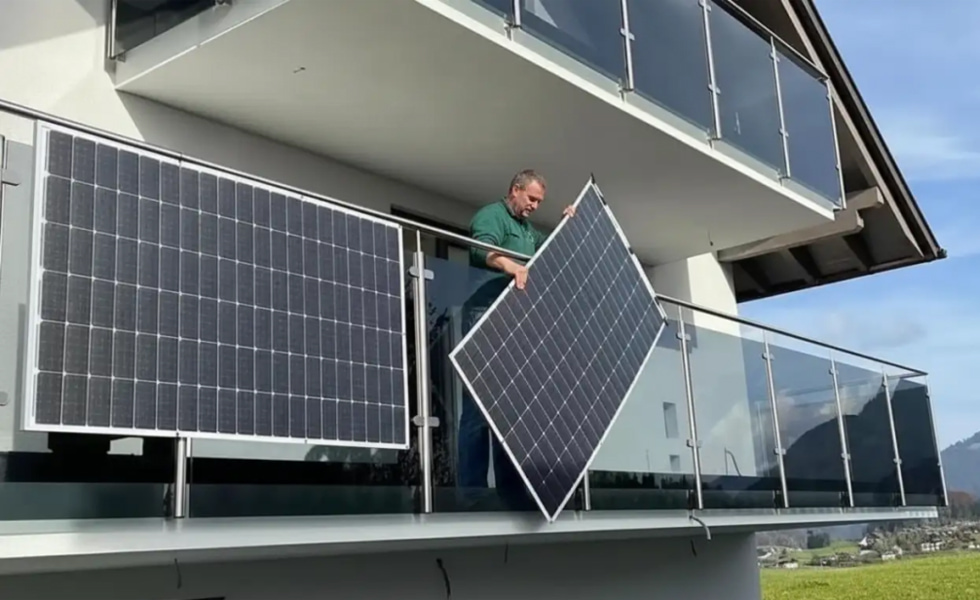
No verão de 2026, um novo tipo de equipamento apareceu cada vez mais nas varandas de apartamentos em Berlim, Hamburgo e Munique: um ou dois painéis solares pendurados do lado de fora do corrimão, um pequeno inversor escondido atrás deles e uma bateria de armazenamento de energia do tamanho de uma mala colocada ao lado deles. Diferentemente dos sistemas solaressolares de telhadoque exigem equipes de construção, eletricistas, aprovações e conexão à rede, ou fontes de energia para camping usadas apenas ocasionalmente ao ar livre, sua operação típica é simples: compre, coloque na varanda ou no quintal, conecte ospainéis solarese depois ligue-o ao circuito elétrico doméstico.
Esta é a tecnologia de armazenamento de energia solar em varandas que cresce rapidamente na Europa.
Parece pequeno, até um pouco discreto. Mas impulsionada pelos altos preços da eletricidade na Europa, altas taxas de aluguel, recursos limitados de telhados e políticas mais flexíveis, essa categoria antes marginalizada está se transformando em uma rara porta de entrada de energia voltada ao consumidor. O que é ainda mais interessante é que os principais participantes dessa transformação nas varandas europeias são quase totalmente empresas chinesas.
Em outras palavras, os lares europeus estão instalando suas próprias pequenas usinas elétricas nas varandas, mas o que sustenta esse mercado são as capacidades sistêmicas da manufatura chinesa e das marcas chinesas.
I. Uma nova espécie surgindo das brechas
No passado, os produtos de energia doméstica eram amplamente divididos em duas extremidades.
Uma extremidade era o armazenamento portátil de energia, como um "grande banco de energia", adequado para camping, emergências e atividades ao ar livre, mas que não conseguia se integrar de forma confiável ao sistema elétrico doméstico. A outra extremidade era o tradicionalsistema fotovoltaico solar de telhado combinado com armazenamento de energia residencialoferecendo alta geração de energia e um sistema completo, mas com preço elevado, instalação pesada e longo período de retorno. Para muitas famílias europeias, especialmente moradores de apartamentos e inquilinos, a energia solar no telhado não era algo que elas "não queriam instalar", mas sim algo que elas "não podiam pagar".
O armazenamento de energia solar em varandasse encaixa perfeitamente no meio.
Um sistema padrão de armazenamento de energia solar em varandas normalmente inclui painéis solares, um microinversor, baterias de armazenamento de energia conectáveis e um sistema de gerenciamento de energia. Os painéis solares geram eletricidade durante o dia, priorizando as cargas domésticas; o excesso de eletricidade é armazenado nas baterias e liberado à noite ou quando os preços da eletricidade estão mais altos. Ele não pretende suprir todas as necessidades elétricas da casa, mas sim atender cargas diárias básicas, como geladeiras, roteadores, iluminação, modo de espera da máquina de lavar e uso de computador.
Esta também é sua maior diferença em relação à energia solar tradicional: o armazenamento de energia solar em varandas não é um projeto de engenharia, mas um produto de consumo. Os consumidores não precisam entender esquemas complexos de conexão à rede, nem precisam reservar dezenas de milhares de euros para um único sistema. O relatório de 2025 da SolarPower Europe afirma que sistemas fotovoltaicos plugáveis podem cobrir de 5% a 25% da demanda anual de eletricidade doméstica em alguns mercados europeus, com um período médio de retorno de cerca de 2 a 6 anos. Para um produto de energia doméstica com preço entre algumas centenas e alguns milhares de euros, esta é uma proposta muito atraente.
Portanto, a verdadeira inovação do armazenamento de energia solar baseado em varandas é que ele "aplica" o sistema de energia aos aparelhos domésticos.
II. A explosão inicial da Europa: nenhum acidente
O armazenamento de energia solar baseado em varandas na Europa foi inicialmente impulsionado pelos preços da eletricidade.
Dados do Eurostat mostram que o mercado europeu de eletricidade tem enfrentado preços persistentemente altos nos últimos anos. No primeiro semestre de 2025, o preço médio da eletricidade para residentes da UE foi de €28,72 por 100 kWh, com a Alemanha atingindo €38,35, o maior valor da UE. O Escritório Federal de Estatística da Alemanha divulgou posteriormente que, no segundo semestre de 2025, o preço médio da eletricidade para residentes alemães foi de 40,55 centavos de euro/kWh, ainda 23,4% superior ao do segundo semestre de 2021. Desde março de 2026, o aumento dos preços do gás natural devido ao conflito entre EUA e Irã voltou a elevar os preços da eletricidade na Europa.
Para os lares europeus comuns, contas de eletricidade frequentemente na casa dos milhares de euros são um peso significativo. Mesmo que o auge da crise energética tenha passado, a sensibilidade das famílias europeias aos preços da eletricidade foi alterada permanentemente.
O segundo fator-chave é a estrutura habitacional. A Alemanha é o país de aluguel mais típico da UE. Dados da Destatis mostram que, em 2025, 52,8% da população alemã viverá em moradias alugadas, a maior proporção da UE. Para esses residentes, o telhado geralmente não pertence a eles, e modificações nas paredes externas são difíceis de implementar, mas a varanda é um dos poucos espaços onde podem tomar suas próprias decisões.
Sun Zhongwei, presidente da Huabao New Energy, afirmou francamente que um sistema fotovoltaico tradicional de telhado com armazenamento de energia custa entre US$20.000 e US$30.000, "determinando objetivamente que ele só pode atender cerca de 5% das famílias de alto padrão". Em contraste, sistemas fotovoltaicos e de armazenamento de energia plug-and-play para varandas e pátios exigem apenas cerca de 800 euros para produtos de entrada, com baixo investimento inicial, curto período de retorno e procedimentos de instalação extremamente simplificados.
Cálculos mostram que um sistema de armazenamento de energia solar em varanda com painéis fotovoltaicos de 900W e uma bateria de 1,6 kWh tem um período de retorno de apenas 4,13 anos (sem incluir subsídios), muito superior ao sistema tradicional de armazenamento de energia residencial.
O terceiro fator é a flexibilização das políticas. Em abril de 2024, o Parlamento Federal Alemão aprovou a Lei Solarpaket I, com três reformas importantes que reduziram diretamente ao mínimo o limite de instalação de sistemas solares em varandas: o limite de potência de saída do inversor foi elevado de 600W para 800W, permitindo uma capacidade total do sistema de até 2kW; o processo de registro foi significativamente simplificado; e os proprietários foram proibidos de impedir inquilinos de instalar sistemas solares.
Em fevereiro de 2025, a Lei Solar Peak da Alemanha consolidou ainda mais essas políticas. A Áustria simplificou aprovações, a França implementou "aprovação zero", a Itália introduziu subsídios e benefícios fiscais, e o Reino Unido e a Suíça seguiram o mesmo caminho em 2026.
Os efeitos dessas políticas foram imediatos. Em 2024, 435.000 sistemas solares de varanda foram registrados na Alemanha, representando mais de 40% do total de novas instalações solares do ano. Em 2024, aproximadamente 220.000 sistemas de armazenamento de energia foram instalados na Alemanha junto com sistemas fotovoltaicos solares de varanda, representando um aumento de 97% em relação ao ano anterior.
Esse impulso de crescimento continuou em 2025. No final de junho de 2025, o número acumulado de sistemas fotovoltaicos solares de varanda registrados na Alemanha havia ultrapassado um milhão. Somente de janeiro a abril de 2025, foram adicionadas 135.000 novas instalações, um aumento de 36% em relação ao ano anterior. Segundo dados da Agência Federal de Redes da Alemanha, o número total de sistemas fotovoltaicos solares de varanda registrados em 2025 foi de aproximadamente 430.000 unidades, com capacidade instalada de cerca de 500 MW, representando um aumento anual de aproximadamente 25%.
O armazenamento de energia também está seguindo rapidamente essa tendência. Um estudo conjunto da Anker SOLIX e da EUPD prevê que o número de produtos de armazenamento de energia para sistemas fotovoltaicos solares de varanda instalados na Alemanha ultrapassará 300.000 em 2025. Outros dados mostram que dispositivos de armazenamento de energia para varandas representarão 30,6% do mercado geral de armazenamento de energia residencial em 2025. A energia fotovoltaica solar de varanda e o armazenamento de energia estão passando de um "acessório opcional" para um "recurso padrão".
III. Por que as empresas chinesas dominaram este mercado?
A resposta não é misteriosa. Primeiro, este é exatamente o campo em que as empresas chinesas se destacam.
No subsegmento de armazenamento de energia em varandas, os participantes mais ativos são gigantes do armazenamento portátil de energia, representados por empresas como Huabao New Energy, Anker Innovations, Jianghai Technology (Zhengtuo) e Zhenghao Innovations. Essas empresas aproveitaram sua profunda experiência no mercado consumidor para garantir suas posições antecipadamente.
A Anker Innovations iniciou seu negócio de armazenamento de energia em 2015, pioneirizou o setor de armazenamento de energia solar em varandas em 2023 e entrou em uma fase de desenvolvimento em larga escala de 2023 a 2024. Em 2024, o negócio de armazenamento de energia da empresa alcançou receita anual de 3,02 bilhões de yuans, um aumento anual de 184%, dos quais aproximadamente 1,4 bilhão de yuans vieram de produtos de armazenamento de energia solar em varandas. No primeiro semestre de 2025, os produtos recarregáveis de armazenamento de energia da Anker Innovations alcançaram receita de 6,816 bilhões de yuans, um aumento anual de 37%. Em termos de participação de mercado, projeta-se que a Anker Innovations detenha aproximadamente 14,6% do mercado global de armazenamento de energia solar em varandas em 2025, ficando em primeiro lugar no mundo.
No segmento de inversores, Yunneng Technology e Hema Micro-Inverter são grandes fornecedores chineses de microinversores de armazenamento solar instalados em varandas na Europa. A Yunneng Technology ocupa o primeiro lugar em volume de vendas no mercado europeu de microinversores, com vendas acumuladas de 1,9 milhão de unidades; a Hema Micro-Inverter ocupa o segundo lugar na Europa, com vendas acumuladas de 1,1 milhão de unidades.
Essas empresas originalmente começaram fabricando armazenamento portátil de energia e exportando eletrônicos de consumo, portanto seus canais globais e experiência operacional já estão prontamente disponíveis. Pode-se entender que isso não é uma mudança entre setores, mas sim uma adaptação natural.
Em segundo lugar, o modelo de negócios permite que empresas chinesas ganhem "dinheiro do intermediário" pela primeira vez.
Como o armazenamento tradicional de energia residencial é vendido? Proprietários de marcas → distribuidores → instaladores, camada por camada, exigindo, em última instância, que instaladores estrangeiros façam a instalação. As empresas chinesas nessa cadeia frequentemente desempenham apenas o papel de fabricantes no topo, obtendo um lucro pequeno.
O armazenamento solar em varandas é diferente. Ele é plug-and-play e não exige instaladores altamente especializados. Os canais de vendas mudaram completamente de agentes profissionais de energia para plataformas de varejo de massa como Amazon, Costco e IKEA. Empresas chinesas vendem diretamente aos consumidores europeus por meio da Amazon e de sites das marcas, em um modelo B2C, eliminando todos os intermediários. Portanto, as empresas chinesas não estão apenas fornecendo produtos nos bastidores; elas estão enfrentando diretamente os consumidores europeus e lucrando com toda a cadeia de suprimentos.
Terceiro, elas controlam a própria cadeia de suprimentos.
Células de bateria, microinversores, módulos fotovoltaicos — os componentes principais estão todos na China. A China possui a cadeia industrial mais completa e de menor custo para baterias de fosfato de ferro-lítio, microinversores e módulos fotovoltaicos. Outros países não conseguem contornar a cadeia de suprimentos chinesa se quiserem entrar no mercado.
O produto de terceira geração de armazenamento solar em varandas DIY da Huabao New Energy, a série Jackery SolarVault 3, lançada em março de 2026, tem um produto padrão (armazenamento de energia de 2,5 kWh + painel fotovoltaico de 1 kW) com preço de apenas €899, significativamente inferior ao preço dos concorrentes de €1100-1200, com período de retorno do investimento de apenas 3-4 anos. Essa vantagem de preço depende de suas capacidades na cadeia de suprimentos.
As capacidades dos produtos estão prontamente disponíveis, o modelo de negócios contorna territórios estrangeiros e a cadeia de suprimentos continua em suas próprias mãos. Não é surpreendente que as empresas chinesas tenham vencido essa batalha.
IV. Empresas chinesas venceram a primeira metade, mas a segunda metade acabou de começar
Segundo estatísticas incompletas, atualmente existem mais de 300 participantes no mercado de armazenamento de energia solar em varandas, sendo a grande maioria da China. A Anker Innovations detém aproximadamente 15% da participação do mercado global de armazenamento de energia solar em varandas, enquanto as três principais empresas juntas representam cerca de 25%. Isso significa que, embora as empresas chinesas tenham assumido a liderança nesse setor, o cenário está longe de ser estável. A competição mais intensa daqui para frente provavelmente não será entre empresas chinesas e europeias, mas sim entre empresas chinesas competindo entre si.
O ponto principal é que essa disputa interna não está mais limitada ao nível do hardware.
Até 2025, o armazenamento de energia em varandas na Alemanha representará 30,6% da capacidade total instalada no mercado de armazenamento residencial de energia e 11,4% em termos de capacidade. Esses dados indicam que a base de usuários de armazenamento de energia em varandas está se expandindo rapidamente, mas a capacidade dos sistemas individuais permanece relativamente pequena. Em outras palavras, ele passou de um produto de nicho e experimental para o mercado de massa, mas ainda não se tornou um verdadeiro sistema de energia para toda a casa.
Com o aumento do número de participantes, indicadores de hardware como custos das células, eficiência dos inversores e potência dos painéis fotovoltaicos se tornarão cada vez mais semelhantes, e os preços continuarão caindo. Competir simplesmente por capacidade, especificações e preço já não é suficiente para criar uma vantagem competitiva de longo prazo.
Os verdadeiros diferenciais estão mudando para três aspectos: conformidade, software e canais de distribuição.
Primeiro, conformidade. A Europa, como mercado central para armazenamento de energia solar em quintais e varandas, possui padrões maduros para conexão à rede, segurança e confiabilidade de produtos de armazenamento de energia solar. Por exemplo, padrões como o alemão VDE-AR-N 4105 e o francês EN 50549 impõem requisitos rigorosos à segurança da conexão à rede. Outros padrões incluem os padrões de segurança de baterias IEC 62619, o regulamento de baterias da UE 2023/1542 e a certificação CE.
Em maio de 2026, a Huabao New Energy tornou-se a primeira empresa a obter certificação de conexão à rede da SGS para vários países europeus, passando com sucesso pelos padrões de conexão à rede VDE 4105 da Alemanha, EN 50549 da França e outros mercados europeus. Essa certificação não cobre apenas indicadores essenciais como segurança elétrica, compatibilidade do sistema e estabilidade da conexão à rede, mas também envolve padrões complexos de teste, altas barreiras técnicas e requisitos de conformidade extremamente rigorosos.
A Jianghai Technology, empresa controladora da Zhengtuo, também está trabalhando para melhorar suas capacidades de conformidade e localização. Dados mostram que a empresa concluiu um financiamento da rodada B de centenas de milhões de yuans e continua promovendo a implementação de seus produtos e serviços em mercados centrais como França, Alemanha e Países Baixos. Para empresas como essa, a certificação deixou de ser apenas um "documento de qualificação", tornando-se um ingresso para o mercado europeu.
A segunda mudança é que o software está se tornando um novo campo de batalha para o armazenamento de energia solar em varandas.
A Alemanha exigirá que todos os fornecedores de eletricidade ofereçam preços dinâmicos a partir de 2025. Os preços da eletricidade irão variar diariamente com base nas condições do mercado atacadista, no clima e na carga. Para equipamentos de armazenamento de energia, isso significa que seu valor não será mais apenas "gerar eletricidade durante o dia e usá-la à noite", mas decidir automaticamente quando carregar, quando descarregar e quando mudar as cargas domésticas para o modo mais econômico com base nas mudanças nos preços da eletricidade.
O problema é que usuários comuns têm dificuldade para gerenciar esse agendamento por conta própria.
A terceira mudança é que canais e serviços se tornarão cada vez mais importantes.
No início, o armazenamento de energia solar em varandas dependia de canais online para crescer rapidamente, usando Amazon, sites das marcas, sites independentes e publicidade em redes sociais, permitindo que empresas chinesas contornassem o tradicional sistema de distribuição e instalação em várias camadas do mercado de energia. No entanto, à medida que os produtos evoluem de simplesmente serem "prontos para uso" para "integração de longo prazo ao sistema elétrico doméstico", serviços pós-venda, garantias, suporte local ao cliente, explicações de conformidade, devoluções e trocas, e suporte de instalação tornam-se cada vez mais importantes.
Portanto, a próxima etapa da competição não será apenas entre empresas de hardware, mas entre empresas de marcas, empresas de canais, empresas de software e capacidades locais de prestação de serviços.
Na verdade, a lógica competitiva da indústria global de armazenamento de energia está passando por essa mudança: a era da competição baseada exclusivamente em hardware está chegando ao fim; hardware e software integrados, despacho baseado em IA, adaptação dinâmica aos preços da eletricidade, ecossistemas de energia doméstica e capacidades de conformidade europeia estão se tornando os novos campos de batalha centrais.