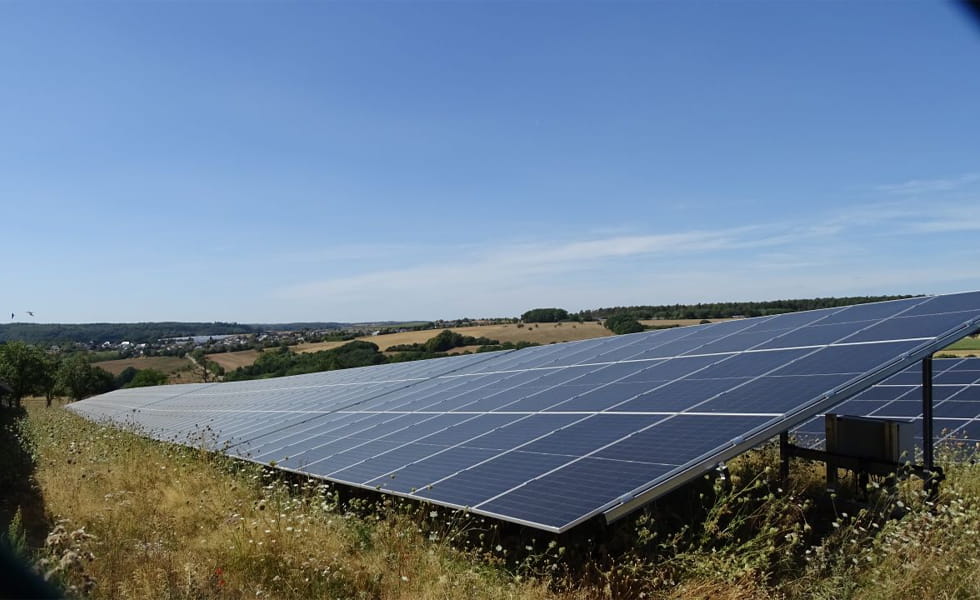
In its latest report on the global renewable energy sector, the International Energy Agency (IEA) forecasts that 3.6 terawatts (TW) of new solar photovoltaic (PV) capacity will be added globally between 2026 and 2031.
In its Renewables 2026 report, released late last week, the IEA notes that solar PV will remain the primary driver of growth in the coming years, accounting for three-quarters of the total expansion in global renewable energy capacity through 2031.
Of this 3.6 TW of new solar capacity, more than half (2 TW) will come from utility-scale, ground-mounted PV projects, while distributed solar—encompassing residential, commercial and industrial (C&I), and off-grid systems—is projected to reach 1.5 TW of new capacity by 2031.
The IEA states that solar PV’s lower generation costs, compared to both other renewable sources and traditional energy technologies—bolstered by strong policy support—make it highly economically attractive to developers, businesses, and consumers alike.
While China will remain the central market driving global renewable energy growth in the coming years, its pace of expansion is expected to moderate; its share of new global capacity is forecast to decline from 60% in 2025 to 53% over the 2026–2031 period.
In contrast, India’s renewable energy growth rate between 2026 and 2031 is set to be 1.6 times higher than that of the preceding six-year cycle. The South Asian nation will emerge as the second-largest contributor to global capacity expansion, accounting for nearly 8.5% of the global total by 2031.
Beyond its role as the second-largest contributor to global renewable energy expansion, the IEA also anticipates that India will be the only country—other than China—capable of scaling up the production of all core components within the solar PV supply chain. The growth rate of renewable energy capacity across three major regions—ASEAN, the Middle East and North Africa (MENA), and Sub-Saharan Africa—is projected to triple over the next six years, with solar PV accounting for the bulk of the new capacity. Conversely, as shown in the chart below, new solar PV capacity in Latin America is expected to decline by 2031 from its 2026 peak; this downturn is primarily driven by a slowdown in Brazil, while growth in Mexico, Chile, and Colombia is set to remain relatively stable.
Among these four regions, ASEAN is projected to reach the highest annual volume of new solar PV capacity by 2031. The IEA attributes this growth primarily to the rapid implementation of ambitious policy targets—established prior to the recent energy crisis—across several ASEAN nations.
While growth in most regions will be driven by utility-scale, ground-mounted solar PV, the situation differs in Latin America and Sub-Saharan Africa, where the majority of new solar capacity over the next six years will come from distributed solar PV.
In the coming years, South Africa and Nigeria will remain the primary markets for solar PV growth in Sub-Saharan Africa, together accounting for nearly half of the region's new capacity.
Across the period analyzed by the IEA, the European Union is the only region—aside from Latin America—expected to see a decline in new solar PV capacity. In the United States, new capacity is projected to fluctuate, peaking at over 50 GW in 2027 before easing back to 40 GW by 2031.
Energy Security Emerges as a Key Driver for Renewable Energy Growth
A central highlight of this IEA report is that the growing importance of energy security has elevated the strategic status of renewable energy.
Ongoing conflicts in the Middle East—involving the United States, Israel, and Iran—compounded by the recent energy crisis, have underscored the role of renewable energy in strengthening energy security and diversifying supply sources. This has propelled renewable energy to the forefront of policy agendas in many countries worldwide. IEA Executive Director Fatih Birol stated: "Previously, environmental concerns were the primary policy driver for the growth of renewable energy, and the continuous decline in costs has made renewables a highly competitive option in many markets. Today, however, as more countries seek to reduce their reliance on imported fuels, energy security has become a core catalyst for the expansion of renewable energy."
"This new chapter in the growth of renewable energy is truly global in scope; its deployment has moved well beyond core markets to reach every corner of the world, establishing renewables as a central pillar of the global power sector. Renewables currently account for one-third of global electricity generation, and this share is set to approach 50% within the next five years."
Furthermore, the report notes that accelerating the implementation of auction mechanisms, grid infrastructure development, energy storage deployment, and reforms to permitting processes could enable the world to meet the COP28 target of tripling global renewable energy capacity by 2031. While the baseline scenario—on which the charts are based—falls slightly short of this goal, an "accelerated scenario" would see renewable capacity growth exceed the baseline forecast by 20%.
System flexibility emerges as a key challenge and opportunity.
By 2031, the share of renewable energy in global electricity generation is projected to rise from 33% in 2025 to nearly 45%. Between 2026 and 2031, the combined electricity generation from solar PV and wind power is expected to more than double, accounting for over 28% of total global electricity generation by 2031.
By 2029, solar PV is projected to surpass hydropower to become the world’s largest source of renewable electricity.
The continued growth of renewable energy in the coming years will place greater demands on grid infrastructure and interconnection systems, cost-effective energy storage, and dispatchable power sources. By 2031, 17 countries will see variable renewable energy account for more than 50% of their power mix, underscoring the need for further enhancements in demand-side flexibility. In 2024 and 2025, the rate of technical curtailment for wind and solar power in key markets is set to nearly double. By 2025, the volume of curtailed energy is expected to approach 200 terawatt-hours (TWh), and by 2031, this figure will exceed 800 TWh—equivalent to nearly 8% of the total generation from variable renewable energy sources.
In Europe, the frequency of negative electricity prices continues to rise, directly depressing the returns for market-based projects and corporate power purchase agreements (PPAs). The IEA notes that while the deployment of battery energy storage systems (BESS) is helping to mitigate some of the challenges facing solar and wind power, the pace of adoption remains slower than anticipated.
Integrating energy storage with solar and wind power is emerging as a highly attractive solution for enhancing the flexibility of power systems.
The IEA states: "In most regions globally, the cost of electricity from hybrid systems—combining solar or wind with batteries—has fallen below $75 per megawatt-hour. These systems offer significantly greater peak-shaving capabilities compared to standalone solar or wind projects. Such hybrid systems will play an increasingly vital role in the next phase of renewable energy expansion."
Finally, IEA data shows that the global pipeline of renewable energy projects in the late stages of grid interconnection has grown by 60% over the past year, reaching a total of 3 terawatts (TW). This entire increase is accounted for by applications for integrated projects that combine energy storage with solar or wind power.
Meanwhile, India, the United Kingdom, and the United States have implemented stricter grid-connection rules and reforms to the management of interconnection queues. These measures have resulted in the removal of nearly half of the early-stage, standalone wind and solar projects from the queue, prioritizing the grid connection of projects with higher feasibility.