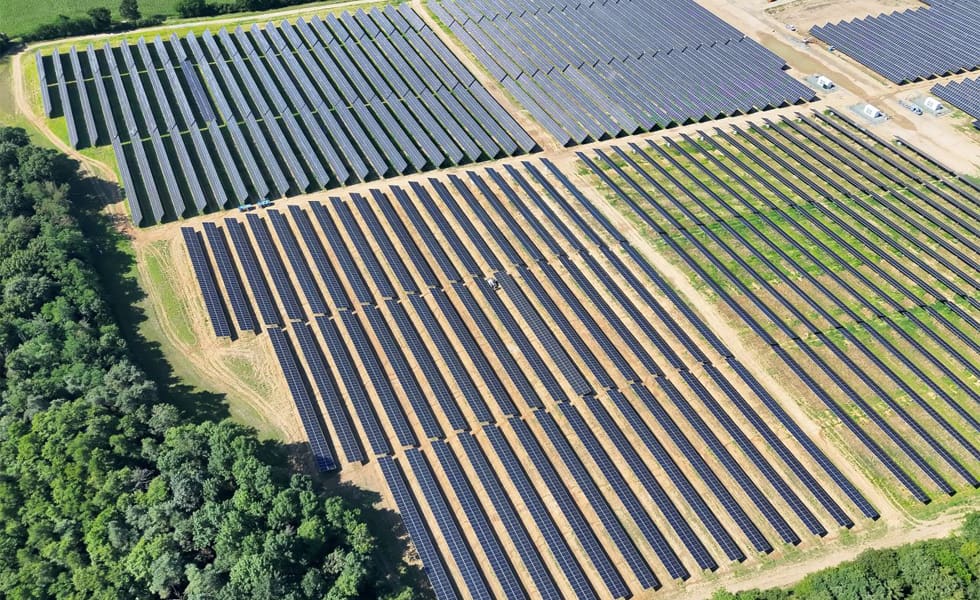
Durante muito tempo, a menção a desertos, ao Gobi e a terras áridas evocava imagens de tempestades de areia, inadequação para o desenvolvimento e até desafios de governança ecológica.
Agora, essas terras estéreis estão se tornando um campo de batalha crucial para o desenvolvimento de novas energias da China.
O plano propõe priorizar a construção de bases de energia eólica e solar na região dos "Três Nortes" (Noroeste, Norte e Nordeste da China) nas áreas do Deserto de Gobi e de terras áridas. Isso não é uma simples declaração; significa que, nos próximos cinco anos, o foco do desenvolvimento de novas energias do meu país se deslocará ainda mais para o Noroeste.
Por que especificamente as áreas do Deserto de Gobi e de terras áridas? A razão é bastante simples.
Por um lado, essas regiões possuem os recursos de energia solar de maior qualidade do país, com longas horas de sol e alta irradiância, sendo naturalmente adequadas para a construção de usinas fotovoltaicas centralizadas de grande escala. Por outro lado, desertos, Gobi e terras áridas oferecem vastas áreas de terreno com amplo espaço para desenvolvimento, não ocupam terras cultiváveis e não entram em conflito com a produção de alimentos, facilitando a obtenção de economias de escala.
Mais importante ainda, as áreas do Deserto de Gobi e de terras áridas já não se resumem simplesmente à construção de usinas fotovoltaicas. O plano também menciona o avanço científico do controle da desertificação fotovoltaica e projetos-piloto para bases de transmissão de eletricidade 100% verde. Isso significa que a construção futura não envolverá apenas projetos de geração de energia, mas também um novo modelo que integra restauração ecológica, desenvolvimento energético e desenvolvimento industrial. Ao reduzir a evaporação da superfície e melhorar o ambiente ecológico subjacente por meio depainéis fotovoltaicoscombinados com a restauração da vegetação e o plantio especializado, o objetivo de "geração de energia sobre os painéis, recuperação ambiental abaixo deles e aumento da renda entre os painéis" está sendo alcançado. O controle da desertificação fotovoltaica está gradualmente passando de práticas exploratórias para uma promoção em larga escala.
Ao mesmo tempo, contando com canais de transmissão de ultra-alta tensão, a eletricidade verde produzida no Noroeste da China continuará sendo enviada aos centros de carga do centro e do leste da China, tornando o Deserto de Gobi uma base verdadeiramente importante para o fornecimento nacional de novas energias.
Para a cadeia industrial fotovoltaica, a importância desses 370 milhões de quilowatts de nova capacidade instalada é claramente muito mais do que apenas um número. Isso significa que, nos próximos anos, desde materiais de silício, pastilhas de silício e células solares até a fabricação de módulos, haverá uma demanda de mercado mais claramente definida; a construção contínua de bases de grande escala também impulsionará o crescimento simultâneo de EPC, operação de usinas, testes e manutenção. Ao mesmo tempo, a transmissão de novas energias em larga escala exige o apoio coordenado de transmissão de ultra-alta tensão, modernização da rede esistemas de armazenamento de energiatrazendo novas oportunidades de desenvolvimento para toda a cadeia industrial de novas energias.
Nos últimos anos, o setor tem discutido como absorver o excesso de capacidade e como superar a competição por preços. Agora, com a construção acelerada de bases no Deserto de Gobi, um novo mercado mais previsível está gradualmente se abrindo.
As localidades estão disputando uma posição na corrida pelo desenvolvimento baseado em desertos.
Mesmo antes da implementação oficial do "Plano", várias províncias já haviam iniciado seus planejamentos estratégicos.
A Mongólia Interior continua na vanguarda. Como área central para a construção das bases de desenvolvimento em desertos do meu país, a Mongólia Interior viu recentemente o lançamento de uma série de grandes projetos. Em julho, o projeto de energia a carvão da Huaneng Kubuqi, com nível de 10 milhões de quilowatts, que apoia a base de desenvolvimento baseada no deserto, iniciou oficialmente sua construção. Este é o primeiro projeto de energia a carvão de apoio a uma base de desenvolvimento baseada no deserto a iniciar a construção durante o período do 15º Plano Quinquenal. Toda a base está planejada para ter uma capacidade total de energia eólica e solar superior a 12 milhões de quilowatts, juntamente com armazenamento de energia e energia a carvão de apoio, com investimento superior a 60 bilhões de yuans.
Enquanto isso, o projeto de transmissão da base de energia eólica-solar-armazenamento de 1 milhão de quilowatts de Chifeng também iniciou oficialmente sua operação, adotando de forma inovadora o modelo "geração de energia acima da plataforma, controle da desertificação abaixo", combinando desenvolvimento de novas energias com restauração ecológica.
Xinjiang explorou outro caminho. Aproveitando seus abundantes recursos solares, a região está promovendo a construção integrada em larga escala de "energia solar térmica + fotovoltaica". Tanto o projeto Datang Shichengzi em Hami quanto o Projeto de Demonstração de Energia Verde de Hami da China Energy Construction combinam energia fotovoltaica com armazenamento de energia solar térmica. Por meio de tecnologias como armazenamento térmico por sais fundidos, a nova fonte de energia pode gerar eletricidade não apenas durante o dia, mas também produzir energia continuamente à noite, melhorando a eficiência geral de utilização da base.
O foco do desenvolvimento de Gansu está na transmissão de energia por ultra-alta tensão. Aproveitando o corredor de "Transmissão de Energia Gansu-Zhejiang", vários projetos de nível de megawatts na Base de Novas Energias do Deserto de Tengger estão em construção simultânea. Muitos desses projetos já não se concentram apenas na geração de energia, mas integram controle da desertificação, restauração ecológica e desenvolvimento fotovoltaico, transformando verdadeiramente o controle da desertificação fotovoltaica de um conceito em prática de engenharia.
Ningxia também desenvolveu sua própria abordagem única. A região utilizou plenamente áreas de subsidência causadas pela mineração de carvão para construir bases fotovoltaicas de grande escala, transformando antigas áreas de mineração abandonadas em bases de novas energias. Atualmente, a maior base de novas energias em uma área de subsidência de mineração de carvão da China opera de forma estável, transmitindo continuamente eletricidade verde para o leste por meio de linhas de ultra-alta tensão, alcançando progresso simultâneo na restauração de recursos e no desenvolvimento energético.
Não é difícil perceber que, embora os modelos de construção variem entre as regiões — algumas enfatizando energia fotovoltaica para controle da desertificação, outras explorando armazenamento de energia solar térmica, algumas dependendo da transmissão de energia por ultra-alta tensão e outras desenvolvendo novas fontes de energia em áreas de subsidência de mineração de carvão — a direção subjacente é altamente consistente.
À medida que a construção de bases de "controle da desertificação" acelera, um corredor de energia verde que atravessa o Noroeste da China e conecta todo o país está gradualmente tomando forma. A divulgação deste "Plano" significa que essa exploração regional será oficialmente elevada a uma implantação nacional unificada.
Os 370 milhões de quilowatts de nova capacidade instalada parecem encorajadores.
No entanto, para a indústria fotovoltaica, o verdadeiro desafio não é construir as usinas, mas sim garantir que a eletricidade gerada realmente gere valor.
A primeira questão a ser resolvida é a integração à rede. As áreas mais adequadas para a construção de bases fotovoltaicas de grande escala no meu país estão concentradas principalmente no Noroeste, enquanto os verdadeiros centros de carga elétrica estão localizados principalmente no Leste e no Sul da China. Isso significa que, no futuro, cada vez mais eletricidade verde precisará ser transmitida entre províncias por meio de transmissão de ultra-alta tensão.
Portanto, ao propor acelerar a construção de bases de "deserto e Gobi", o "Plano" também enfatiza especificamente a construção de bases de transmissão de eletricidade 100% verde. As bases podem ser construídas rapidamente, mas se a rede elétrica de apoio, os canais de transmissão e os sistemas de despacho conseguirão acompanhar determinará diretamente o valor final desses projetos.
Além disso, o equilíbrio ecológico também é uma questão inevitável. O controle da desertificação por meio de sistemas fotovoltaicos alcançou muitos sucessos nos últimos anos, mas isso não significa que todos os desertos e áreas de Gobi sejam adequados para o desenvolvimento em larga escala. Diferentes regiões possuem diferentes condições naturais e ambientes ecológicos. Como equilibrar anova energiaconstrução com a proteção ecológica, garantindo que a construção seja adequada às condições locais e que a restauração ecológica seja adequada às condições locais, ainda requer mais planejamento científico e operação de longo prazo.
Outra questão mais prática é a rentabilidade. Nos últimos dois anos, os preços dos componentes vêm diminuindo, e os custos de investimento em usinas elétricas vêm caindo. No entanto, ao mesmo tempo, fatores como a entrada total da nova energia no mercado e as flutuações nos preços da eletricidade verde também levaram a uma nova fase de ajustes na rentabilidade das usinas elétricas. No futuro, os projetos de grande escala não precisarão apenas ser construídos, mas também deverão ser financeiramente viáveis. Se mecanismos de mercado como o comércio de eletricidade verde, os certificados verdes e os mercados de carbono puderem ser ainda mais aprimorados, isso também se tornará uma variável importante que afetará a rentabilidade dos projetos.
No entanto, de outra perspectiva, esses desafios mostram precisamente que a indústria fotovoltaica entrou em uma nova fase de desenvolvimento.
Nos últimos anos, a competição era sobre quem conseguia instalar mais; no futuro, a competição será sobre quem consegue construir melhor, operar com mais eficiência e gerar retornos mais estáveis.
Para a indústria fotovoltaica, isso representa tanto uma nova oportunidade de mercado quanto um novo teste de capacidades. Aqueles que conseguirem se adaptar ao novo modelo de desenvolvimento e acompanhar o novo ritmo da indústria terão maiores chances de compartilhar os benefícios trazidos por esta rodada de construção em "terras áridas".